🚨Chapter 8 : How We Mourn -What We Carry When We Say Goodbye
🚨How We Mourn: Facing the One Thing We Can’t Escape
💡If there is one thing in a human life that is both the saddest and the most unavoidable, it is death. The dead have no more words left to say. The grieving is always left to those who remain. How we mourn differs from culture to culture, but underneath all of it runs the same current: to send someone off with dignity, and to find, somehow, the strength to keep living. Today I want to look at how the world mourns, and then tell you the real story of how I said goodbye to my own parents.
1. The Many Faces of Grief Around the World
How people meet death is remarkably different from place to place. In parts of Korea, whole villages once carried the funeral bier together, or a lead singer would compose a song of the deceased’s life to guide them toward a peaceful afterlife. Today, a three-day funeral — placement, encoffining, and the final procession — is the most common form.
In Tibet, the body is returned to the sky through a sky burial, offered to birds. In Judaism, burial happens as quickly as possible, followed by seven days of shiva and thirty days of shloshim. The Irish wake gathers family and neighbors to keep watch over the body together, treating the loss as something the whole community carries. Bali’s Ngaben cremation ceremony and Mexico’s Día de los Muertos, by contrast, send the soul off with elaborate processions and something closer to festival joy. In Ghana, “fantasy coffins” shaped like whatever the deceased loved in life are carried off to music and dancing — though that particular joy is reserved only for those who lived a long, peaceful life, not for the young or the sudden dead.
2. The Manner of Death Shapes the Shape of Grief
The same death, met in a different way, leaves behind a completely different kind of grief. Grief for someone who died after a long illness tends to be “anticipatory grief” — sorrow that arrives slowly, in advance, because there was time to prepare and to say what needed saying. Grief for a sudden, unexpected death — an accident, a disaster — is closer to “traumatic grief,” carrying guilt and intrusive memories that make the road back to ordinary life far harder.
We often call a death that comes at the end of a long, full life a “good death.” But Korean carries an even finer distinction. Losing a parent is called cheonbung — the sky collapsing. Losing a child is called chamcheok — a grief so unspeakably cruel it has no equivalent word in most languages (English comes closest with “vilomah,” for a parent who has outlived a child). There’s an old saying: a parent is buried in the ground, but a child is buried in the heart. That is also why, no matter how long someone lived, their death is never quite called a “good death” if it left a parent behind to grieve them.

3. Grief, Set to Music and Verse
Long before any of us were born, people were already putting into song and verse what words alone couldn’t hold. Eric Clapton wrote “Tears in Heaven” after losing his young son. Luther Vandross gave voice to the ache of a father’s absence in “Dance With My Father.”
I also share an original song of mine “My Dear Mother, My Endless Song“remembering my late mother with longing and gratitude.
In English, Mary Elizabeth Frye’s “Do Not Stand at My Grave and Weep” remains the most widely read poem of comfort, its speaker insisting she is not in the grave at all, but in the wind, the sunlight, the falling snow — asking those left behind not to weep.
4. The Road I Walked, Saying Goodbye to My Parents
I was not there when either of my parents, or my parents-in-law, passed away. Living in the United States put an ocean and a clock between us, and that final moment was simply not mine to control.
My mother, in particular, spent nearly nine years in and out of a hospital bed. It was a long illness. And it was only two months after we had moved to the United States that I received the call that she had passed. My children were still small, and I was the only one who could go. I packed in a daze and rushed to the airport, and it was there, waiting in a shared airport restroom, that it finally became real. I cried for a long time in that stall. I cried on the plane, and cried again. The image of my mother the last time I’d seen her, only two months before, kept surfacing in my mind. I remember regretting, in that moment, ever having moved to America at all.
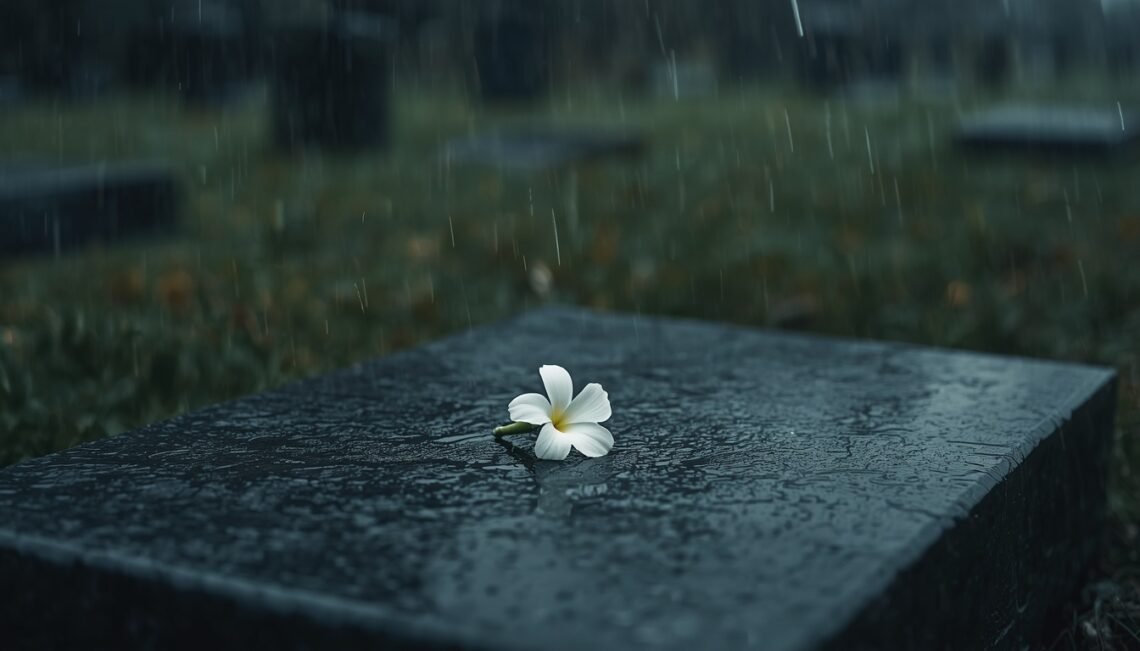
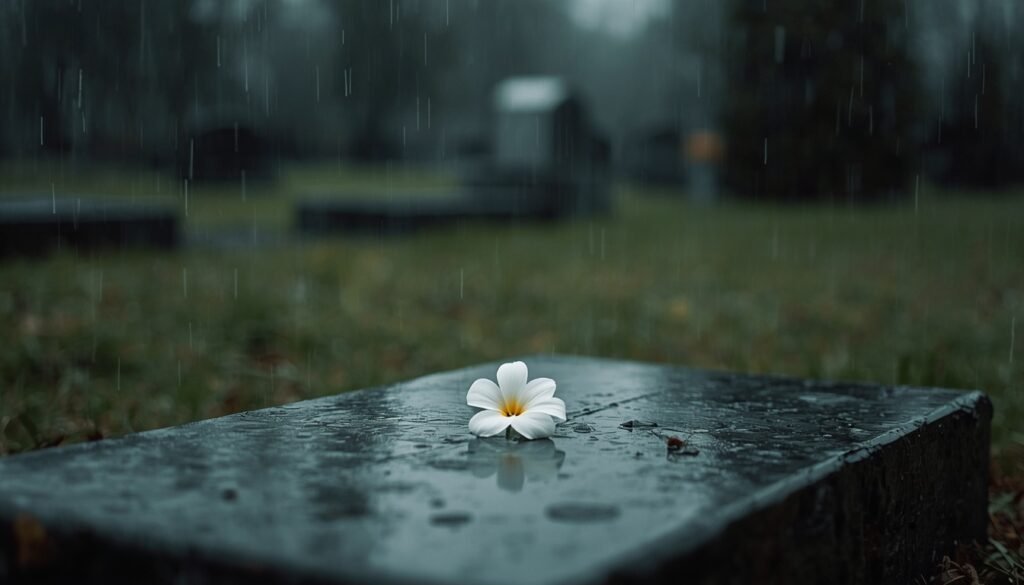
That is how I said goodbye to my mother. In Korea, a three-day funeral is usually followed by burial at the gravesite. It was May, and it rained hard that day. The saddest moment of all was scattering the last handful of soil over her grave. Goodbye is always sad, always painful, and I still miss her even now. I know now that losing a parent is not something time simply heals. Every Mother’s Day, without fail, I think of her more than usual.
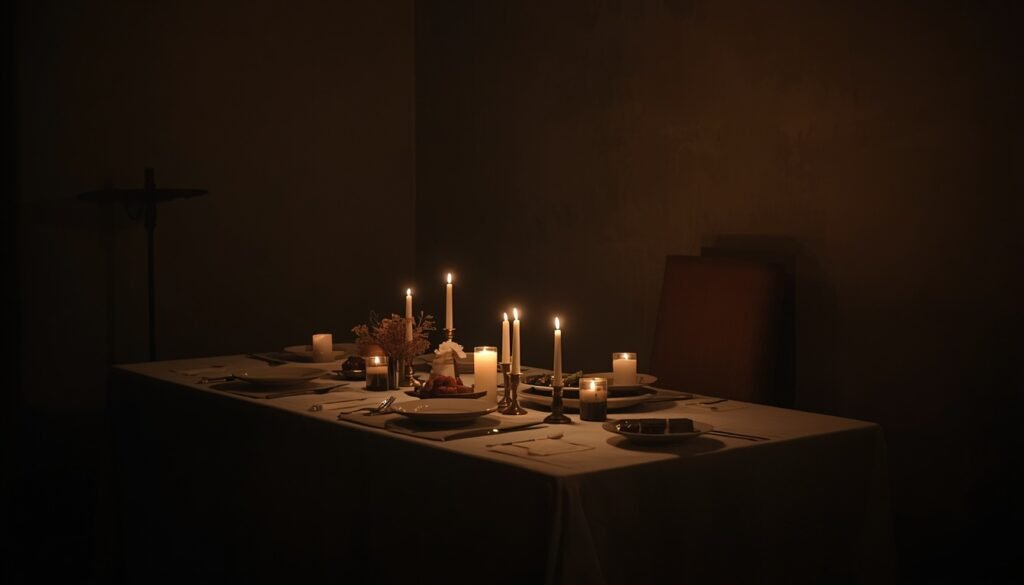
That is part of why, here in America, we still keep the days our parents passed. Four times a year, we prepare food with real care and hold a memorial rite for them — jesa, a Korean ancestral remembrance ceremony. Even after doing it for years, it has never once felt like a chore or a burden. Strangely, going through that ritual makes it feel as though our parents are with us again, if only for that day, and talking about them together with my family becomes its own quiet comfort — for all of us.

5. In Closing: Mourning Is Love’s Last Goodbye
To mourn someone is, in the end, proof that you loved them. The regret of not having been there at the very end, the sorrow of that last handful of earth, the care taken each year in preparing a memorial meal — all of it is evidence of having truly loved someone. Grief may never fully heal. But when we face it honestly, rather than turning away from it, mourning becomes a lighthouse that guides us back toward living. Today, I still miss my parents, and I go on living while I wait for the day I’ll see them again.
Frequently Asked Questions (FAQ)
Q. Why do funeral customs differ so much from country to country? A. Because each culture holds a different view of the afterlife, shaped by its environment and religious beliefs — how a culture treats the body and soul, and how a community shares its grief, has developed differently everywhere.
Q. How does grief differ between a sudden death and an anticipated one? A. Anticipated grief unfolds slowly because there is time to prepare for the loss, while grief for a sudden death often carries guilt and intrusive memories that make it much harder to return to ordinary life.
Q. Does the grief of losing a parent ever go away with time? A. Not entirely. Regular rituals — a memorial rite, an anniversary observed together — can help the living carry that grief rather than be consumed by it.
© Our Timeless Notes. All rights reserved.



You May Also Like

🚨Chapter 10. A Small Lighthouse in the Heart — How Classical Music Gently Holds Us

🚨Chapter 11 – The Happiness the Night Sky Gives Us| Stars..