🏛️Chapter 18: The Invisible Wall-The Psychology of Racism Absorbed Unknowingly
🏛️The Wall of Desire to Reject Difference
Beyond the fake boundaries of skin color, for the souls who became invisible.
[Introduction]
We often say that we live in a global era and a multicultural society. Yet, the shadow of racism, still actively twitching deep beneath our skin, reveals a sorrowful deficit in human nature: the drive to exclude the “different.” Neither the vast American society built by all races of the world nor the Korean society that long boasted its ethnic homogeneity is free from this universal darkness.
![[The Present, Map of Self, Modern Deficit] Chapter 18-1](https://ourtimelessnotes.com/wp-content/uploads/2026/07/The-Present-Map-of-Self-Modern-Deficit-Chapter-18-1.png "🏛️Chapter 18: The Invisible Wall-The Psychology of Racism Absorbed Unknowingly 2")
[A Memory of the First Year in a Strange Land: The Mall Manager’s Cowardly Gaze]
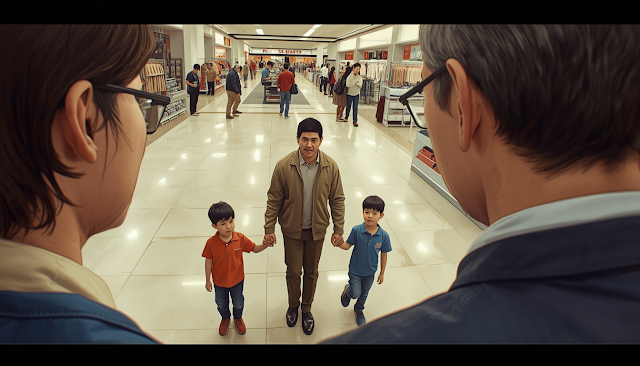
Long ago, it was our very first year of immigrating to the United States. In those days, when everything was unfamiliar and exciting, I visited a shopping mall to buy toys for my children at a famous sports specialty store that has now disappeared. The children, simply thrilled by the new items, ran around excitedly chattering in Korean. It was the innocent vitality anyone would expect from young children. That day, we were purchasing an enormous amount of goods, totaling nearly ten thousand dollars.
Right then, the Western manager of the store openly expressed his displeasure right to our faces. “What is wrong with those kids, running around here speaking a language we can’t even understand?” That single line, spat out for us to hear, struck our family with immense humiliation and resentment. It felt as though our language and our very existence were being completely denied.
Yet, how flimsy human prejudice truly is. While meticulously checking the receipt later that day, I discovered that they had incorrectly entered the billing by a whopping $1,500. When I coolly pointed this out, the employees looked at me nervously and went out of their way to be kind, carrying our items all the way to the parking lot. “Our manager isn’t usually like this; he must have had something bad happen today,” they apologized on his behalf. Watching them, I paradoxically realized how cowardly and based on the most trivial prejudices discrimination actually is.
[Erase at the School Gates: The Moment of Becoming Invisible]
Another time, I was dropping my child off at school in an area with very few East Asians. One of the parents was volunteering, handing out some sort of survey or flyer. As my turn approached, she hesitated in front of me and pointedly skipped right past me without handing me a sheet.
It was a minor thing, truly nothing major. Yet, experiencing that subtle exclusion (microaggression) for the first time in my life, a hollow laugh escaped me rather than anger. Even without grand violence, a human being can instantly feel the deep self-deprecation of becoming a ‘transparent person’ through small daily indifferences and erasures. If one had to endure such lingering emotional residues severely every day, anyone would lose the desire to live in this land.
[America and Korea: The Deficit of Two Societies Mirroring Each Other] America is a nation achieved by the blood, sweat, and tears of multi-ethnic peoples. Yet, mainstream Westerners often forget this massive historical fact, acting as if they are the sole owners of this land while erasing the contributions of other immigrants.
Turn your gaze to Korea. Korea, which long confined its thinking to being a ‘homogenous nation,’ has now become a country where countless migrant workers and marriage immigrants live mixed together. While awareness may have improved compared to the past, countries with such a closed history are often more prone to openly dismissing and ‘looking down on’ those coming from nations perceived as poorer. The very gaze of discrimination we endured in America is projected onto other minorities inside the mirror of Korean society.
![[The Present, Map of Self, Modern Deficit] Chapter 18-3](https://ourtimelessnotes.com/wp-content/uploads/2026/07/The-Present-Map-of-Self-Modern-Deficit-Chapter-18-3.png "🏛️Chapter 18: The Invisible Wall-The Psychology of Racism Absorbed Unknowingly 4")
[Conclusion: Moving Beyond ‘Birds of a Feather’ to ‘Together’] Categorizing each other based merely on appearance, skin color, or accent and flocking ‘with our own kind’ might be a human instinct. In the coming digital world, humans might discriminate against AI because it is different, or conversely, AI might learn to discriminate by studying the prejudices embedded in human data.
However, in a world so tightly interconnected, drawing lines between ‘us’ and ‘them’ is an act of self-isolation. A cold gaze directed at others ultimately returns as a boomerang. Whether it is the Westerners of a multi-ethnic nation or the Koreans waking up from the illusion of a homogenous race, we must now learn not how to flock with our own kind, but how to live ‘together’ as human to human, each bearing our own sacred narrative.
📂 Attachment Suggestion
Everyday_Microaggressions_and_Immigrant_Psychology.txt (English Version)
1. Definition of Everyday Microaggressions
- Concept: Subtle, stunning, often automatic, and non-verbal exchanges which are ‘put-downs’ of racial minorities or immigrants, whether intentional or unintentional.
- Characteristics: Unlike overt discrimination, microaggressions are subtle and ambiguous, making them harder to confront immediately. However, their cumulative effect can be psychologically devastating.
2. Long-term Psychological Impact on Immigrant Groups
- Chronic Stress & Anxiety: Continuous exposure to minor exclusions keeps immigrants in a state of hypervigilance, significantly increasing the risk of chronic anxiety and clinical depression.
- Alienation & “Invisible Person Syndrome”: Experiencing repeated erasure or indifference erodes a person’s sense of belonging, leading to severe self-deprecation and social isolation.
- Reduced Intent to Settle: As psychological safety is compromised, immigrants’ desire to integrate, adapt, and permanently settle in the host country is drastically diminished.
- 3. Comparative Data: Multicultural Acceptance Index (US vs. South Korea)
Analysis CriteriaUnited StatesSouth KoreaCharacteristics of Acceptance– High institutional and surface-level acceptance due to a long history of immigration.
– Pervasive, institutionalized, and covert forms of microaggressions still exist.- Rapid transition into a multicultural society.
– Relatively lower openness toward individuals from specific nations (often lower-income countries) due to deep-rooted ethnic homogeneity.Primary Forms of BiasInvisible barriers and systemic exclusion in mainstream society based on race, accent, and cultural backgroun
© Nosgia Mas. All rights reserved.


You May Also Like

🏛️Chapter 22: The Mirage of the Golden Ticket
🏛️Chapter 12: Exile into the Smartphone Screen: Erased Coordinates and Digital Ghosts