🏛️Chapter 21: The Sorrow of Poverty
🏛️The most fatal structural flaw hidden behind ‘abundance’and ‘growth,’
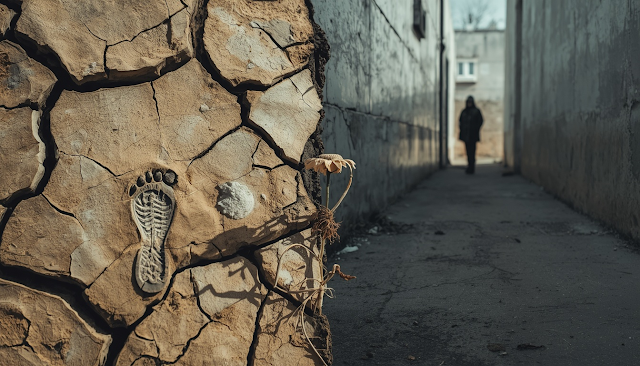
Whether it is absolute famine on the other side of the globe or relative destitution amidst abundance, the ultimate purpose of poverty is the desolation of the human soul.
[Introduction]
Every night through the news, we witness the diverse tragedies of the world. On one side, we hear of children dying with only bones remaining due to starvation in the parched lands of Africa; on the other, the stories of those starving beneath the shadows of glamorous skyscrapers in the world’s wealthiest affluent nations brush past us. Poverty and destitution. This age-old calamity is the most fatal systemic deficit hidden behind the ‘affluence’ and ‘growth’ that modern society so loudly proclaims.
[Two Forms of Poverty: Absolute Starvation and Relative Deprivation]
There is a clear distinction in the types of poverty existing on this Earth. Absolute poverty in Africa is a desperate struggle threatening biological survival itself. The scene where the spark of life is extinguished due to the lack of a sip of water or a handful of grain is the most primitive tragedy humanity faces.
On the other hand, poverty within so-called wealthy nations takes the form of ‘relative poverty.’ While they might not starve to death tomorrow, it is a psychological torture where individuals endure emotional homicide at every moment, constantly comparing themselves to an endlessly glamorous environment.
Yet, these two forms of poverty share a chillingly identical commonality. Beyond material scarcity, their essence lies in breaking down human dignity and ultimately ‘desolating the human soul.’ When poverty deepens, the luxury of dreaming for tomorrow vanishes, leaving behind only the raw instinct to survive today.
![[The Present, Map of Self, Modern Deficit] Chapter 21 -2](https://ourtimelessnotes.com/wp-content/uploads/2026/07/The-Present-Map-of-Self-Modern-Deficit-Chapter-21-2.png "🏛️Chapter 21: The Sorrow of Poverty 3")
[The Most Painful Facet: The Tears and Inheritance of Child-Headed Households]
The most cruel Achilles’ heel of poverty is when it targets ‘young souls.’ Have you ever heard the stories of orphan-headed households, where children, at an age when they should be nurtured under parental protection and cultivating dreams, are thrown into a cold world to bear the entire weight of life alone?
The poverty they endure is not simply a ‘state of having no money.’ It is a forfeiture of opportunity and the confiscation of the right to imagine a future. While others run toward tutoring academies and future possibilities, these children must worry about this month’s rent and electricity bills. The ‘meritocracy’ spoken of in modern society becomes utterly neutralized before the massive and cruel wall of ‘generational poverty.’ It is not a matter of personal laziness, but a structural chain handed to them at birth.
![[The Present, Map of Self, Modern Deficit] Chapter 21 -3](https://ourtimelessnotes.com/wp-content/uploads/2026/07/The-Present-Map-of-Self-Modern-Deficit-Chapter21-3.png "🏛️Chapter 21: The Sorrow of Poverty 4")
[Conclusion: Beyond Charity to Equal Human Rights]
How should we view and solve this problem of poverty? We can never clear away this deep-rooted swamp through one-time alms or gazes of sympathy (charity) directed at pitiful children. We must first withdraw the cold gaze that dismisses poverty as personal incompetence.
The fundamental countermeasure is establishing a systemic safety net that guarantees a minimum ‘starting line’ for the socially vulnerable, such as child-headed households. Providing equal educational opportunities and creating a tight legal and economic system so that children do not abandon their dreams because of destitution—this is not an act of charity, but the restoration of universal rights for a humanity possessing equal dignity. As long as there are those whose souls are desolated by poverty, no society can dare pride itself on being a ‘developed nation.’
📂 Attachment Suggestion
- Global_Poverty_Dynamics_and_Child_Welfare_Systems.txt (English Version)1. Psychological Impact of Poverty on Child Emotional Development
- Depletion of Cognitive Bandwidth: The chronic stress of survival and material scarcity forcibly consumes a child’s cognitive resources. This bandwidth deficit impairs academic concentration and delays the development of the prefrontal cortex, which is essential for future planning.
- Relative Deprivation and Chronic Shame: In environments of relative poverty where social comparison is constant, children internalize a sense of alienation and shame. This erodes foundational self-esteem and leads to long-term social withdrawal in adulthood.
- Hypersecretion of Cortisol (Stress Hormone): Severe housing instability and a lack of emotional support networks place a child’s nervous system in a state of permanent survival mode, exponentially increasing the baseline rates of clinical anxiety and depression.
- Nordic Model (Sweden/Denmark) – Universal Child Basic Income & Housing: By decoupling state support from parental existence, these systems guarantee direct universal stipends and public housing to children, ensuring that the absence of parents does not lead to the immediate confiscation of educational opportunities.
- German Model – Child and Youth Welfare Act (KJHG) Guardianship: Moving beyond passive financial aid, this policy assigns a dedicated professional social worker as a 1:1 guardian until the age of 18 (or 21 if needed). These guardians navigate legal, administrative, and emotional challenges alongside the youth, actively rebuilding their broken social safety nets.
© Nosgia Mas. All rights reserved.



You May Also Like

🏛️Chapter 5: Digital Hermits: The Familiarity of an Isolated World – The Empathy Perception Gap

🏛️Chapter 16: The Illusory Connection-Addiction to “likes” on social media